Wednesday, June 25, 2014

It Ain’t No Corn Dog: Crabby BLTs

People often ask, “But what do you eat?!?!” when they hear David’s list of dietary restrictions. Our answer is usually, “Everything else!” because there really is an enormous world of food to choose from.  Gluten really isn’t even the biggest problem anymore; it’s much harder to avoid paprika and potatoes.

When, exactly, did they get so grown-up?
We were feeling especially deprived during our picnic lunch at the zoo last Sunday, which featured these sandwiches, the brainchild of my physical therapist Stephanie. I don’t know if this is something she’s eaten at a restaurant or her own decadent genius suggestion, but we certainly felt bad for everyone eating corn dogs and nacho chips for lunch that day. Our picnic cooler comes equipped with plates and silverware and cloth napkins, so we dined in style near the fountain.


I’m a big fan of the Lee Brothers cookbooks, the source of the crab salad portion of this recipe. It comes from the Lee Brothers SouthernCookbook, which I came across at Zingerman’s Roadhouse during brunch with my grad school friend Jen. Our outstanding waiter offered to have the Lee brothers sign my cookbook and send it along to me later, since they were going to be a theme event later that week; I’m only sorry that I missed the event, because I had no idea what I huge fan of theirs I was about to become.  I was going to say this is my favorite recipe, but I love the pimento cheese. And the collard greens. And the corn macque choux. And the fried chicken. And the sour orange mojitos. Everything I’ve tried from this cookbook, in fact, with the notable exception of the Cheerwine cocktail; there’s not enough gin in the world to make that stuff taste good.

As for the rest of the ingredients – well, this would be even more amazing between two slices of challah, which is not on the GF-approved list of foods; and of course, use the best-quality bacon you can find.

Crab Salad BLTs

For the crab salad:

6 oz. crabmeat (get the really good stuff from the seafood counter – trust me on this)
3 tablespoons mayonnaise
2 tablespoons fresh lime juice (worth the bother of juicing the lime, in this case)
3 tablespoons finely diced red onion
1 ½ teaspoons minced fresh tarragon
Salt and pepper to taste 

For the sandwiches:

2 slices bread per person, toasted, or a good-quality roll
3 pieces good-quality bacon, cooked and drained
Leaf lettuce
Tomato slices


Mix all the crab salad ingredients together and salt and pepper to taste. When you assemble the sandwich, put the lettuce next to the bread so the mayo doesn’t soak through and ruin your bread; you’re going to want to eat this slowly and enjoy every bite. If you’re picnicking, pack all the ingredients separately and assemble right before you eat, which isn’t nearly as big a bother as it sounds. 

Saturday, June 14, 2014

I Can't Believe We Made It To the End of the School Year: Baked Kibbeh with Onion Topping

Yesterday was the last day of the school year, and the intense two-week sprint to the finish line has left all of us exhausted (science projects! research papers! catching up on an entire quarter of math homework! and fun fun fun in the form of events that require me to drive up to school fifty times a day). Yesterday was also my husband's birthday, and I wanted to make him a nice dinner that really didn't require a lot of effort on my part, because it was a busy day and I'm tired and it took less than 3 hours before we experienced The First Pre-Teen Hormonal Meltdown of the Summer. Kibbeh to the rescue! 

Kibbeh is one of my favorite foods, in all its forms - and there are many, many forms to choose from. The little football-shaped version you get at Middle Eastern restaurants is excellent but there's no way I was frying anything; our microwave broke recently and we have an interim one that sits on the countertop and takes up all the space next to the stove, so setting up a rack to drain them was out of the question. I can't find my usual layered baked kibbeh recipe. I didn't think my kids or in-laws would appreciate the raw version (although that was about the level of effort I felt up to at 5 p.m.).

This version came to the rescue: a baked kibbeh that goes into the oven in about 2 minutes and looks gorgeous when it’s done, thanks to the carmelized onion topping. I’ve seen a number of versions online and have fiddled with it enough that I can make it without looking at someone else’s recipe; it’s a great go-to when I want something a little bit fancy without a ton of work or a trip to the grocery store. I’ve also cut this into little squares and served it as an appetizer, sort of like a meat bruschetta. Which actually sounds kind of gross, now that I think about it.

Feel free to substitute coarse-ground bulghur if you’re so inclined. I’ve found that I actually prefer kibbeh made with quinoa as it’s a bit more flavorful than wheat; cook it in advance and keep it in the fridge, and you can have this ready to go in the time it takes your oven to heat up.

Baked Kibbeh with Onion Topping


1 lb. ground lamb
¾ - 1 cup cooked quinoa
3 large onions
1 teaspoon cinnamon, divided
½ teaspoon allspice
½ - ¾ cup pine nuts
½ cup currants
2 tablespoon pomegranate molasses
Salt and pepper
Olive oil

Preheat the oven to 375.

Put one of the onions in the food processor and chop finely. Add the meat, quinoa, ½ teaspoon of cinnamon, and some salt and pepper and process until the mixture is very soft and pasty; this takes longer than just processing it until it’s combined.

Pat the meat mixture evenly into a pan; if you have a large springform or tart pan (at least 10” in diameter), feel free to use that, otherwise a large rectangular Pyrex baking dish will work just fine. Drizzle a couple of teaspoons of olive oil over the top and spread it evenly, then bake for about 30 minutes.

While this is baking, heat a few tablespoons of olive oil in a large skillet. Slice the remaining two onions thinly, then cook in the oil until they are very soft and well-browned (similar to the topping for mjadara). Add the pine nuts, currants, remaining ½ teaspoon cinnamon, allspice, salt, pepper, and pomegranate molasses, then stir and cook for another few minutes.

Take the meat out of the oven. Cut the meat into wedges or squares (depending on what shape pan you used) and put on a serving platter of some kind. Put a portion of the carmelized onion mixture on top of each piece and serve. Good hot or room temperature.


Sunday, June 1, 2014

Welcome to Summer: Totemic Potato Salad

I don't generally consider myself to be A Food Purist, but there is only one right way to make potato salad. We had friends over for a dinner last weekend in which the Famous Morey Potato Salad played a starring role; since I've spent the better part of this weekend with those same friends AND summer has finally arrived for real, this seemed like a good time to share the recipe. I've made this on so many occasions and for so many different people that it's practically become totemic. Even people who think they don't like potato salad often like this one (if you're one of those people who thinks you don't like potato salad, I hope you're not confusing this with that nasty-ass stuff from Gordon Food Service, which can only be called "potato salad" in the furthest reaches of the marketing department's imagination.) 

I was going to take a picture of the potato salad but we ate it all.
The real deal is simple enough to make, even for a crowd (personal record: 80). My 40th birthday was an excuse to buy an enormous metal bowl that I refer to as the Cauldron of Awesomeness, specifically purchased so I can make sufficiently vast quantities when called for. It holds 20 pounds of potatoes with enough room to stir comfortably; is big enough to bathe the dog in (not, however, at the same time); and bringing it up from the storage shelf in the basement invariably means fun is afoot. 

Obviously I have no way of knowing what size recipe you'll need for your own summer fun, so I'm listing the ingredients per pound of potatoes. Scale accordingly. A few tips about ingredients: 
  • Redskin potatoes are really the best here. You can substitute Idaho potatoes if you need to, but the texture and flavor aren't the same. If you do substitute, peel the potatoes before cooking them. 
  • Use Hellman's, please (unless you're making your own mayonnaise, which is freakin' awesome). Miracle Whip is not mayonnaise. I don't know what it is, exactly, but it's not mayonnaise. 
  • You can use white vinegar if you don't have cider vinegar. 
  • Mustard has no place in this potato salad. Nor do chopped bell peppers, pickle relish, garlic salt, pimentos, carrots, parsley, dill, Ranch dressing, cornstarch, butter, evaporated milk, bacon, cheese, horseradish, or any of the other weird ingredients I've seen. 

Famous Morey Potato Salad

For each pound of redskin potatoes:
3-4 green onions or 1 small white onion
1 large stalk celery
1 hard-boiled egg
1/2 cup Hellman's mayonnaise
splash of cider vinegar

Boil the potatoes until a fork goes in easily, then drain and cool. When the potatoes are cool enough to handle, peel off as much of the skin as you easily can and cut the potatoes into cubes. They don't need to be diced - this is not a delicate dish! - but you want to be able to get more than one piece of potato on your fork at once. 

Mince the onion and celery and add it to the bowl with the potatoes. Cut the egg in half, put the yolk in a small bowl, and chop the white. Add the chopped egg whites to the potatoes, then salt and pepper to taste.

Mash the yolk with a fork, then add the mayonnaise and a splash of vinegar. Mix well, then dip a potato cube in for a taste test. It should be creamy and eggy with just a little bit of tang from the vinegar; add more mayo or vinegar to suit yourself.

Add the mayo mixture to the potatoes and mix well. It should be a little gloppy at this point, since the potatoes will absorb some of the dressing. If you need to make more dressing, I highly recommend mixing it in the small bowl first and adding a little at a time.

Friday, May 9, 2014

Number One Granddaughter Makes Almond Boneless Chicken

I spent a lot of time with my grandfather when I was growing up. I seem to recall he was a meat-and-potatoes kind of person, but every once in a while we’d venture down to Kow Kow Inn for Chinese food. The head waiter was a man named Kenny who could never remember the names of my many aunts and uncles, but had a flawless memory for their birth order. A big night out could include Number One Son, Number Eight Daughter, Number Nine Daughter, Number Ten Son, Number Fourteen Daughter – and of course, me: Number One Granddaughter. While I was certainly not the first-born of my generation (I think I’m actually Number Eight), Kenny knew where I ranked in my grandfather’s heart. Family dynamics like this are a therapist’s meal ticket, but hey – everyone gets to be someone’s favorite something at some point, and I got to be Grandpa’s.

I was not an adventurous eater as a child. I always got the exact same thing: egg drop soup (how this was OK to a picky kid still mystifies me), an egg roll, and Almond Boneless Chicken. Much as I love sweet-and-sour pork and lo mein and beef with broccoli and General Tso’s Chicken and anything at all that involves a noodle, Almond Boneless Chicken is comfort food. It’s probably been 8 years since I ordered this at a restaurant, but knowing that it’s now off-limits means that I started longing for it.

Ah, how did we cook before the Internet? A quick Google search and – hey! Did you know this is a Michigan thing? Because I certainly didn’t. Like I didn’t know that you can’t get a coney dog in Baltimore, and people in other states think that Canada Dry is actually ginger ale when we all know that Vernors is the real deal. I wasn’t surprised to find that Almond Boneless Chicken is as Chinese as chop suey (i.e., not at all) but I didn’t realize it was a regional dish.

This recipe is adapted from one that appeared in the DetroitFree Press in 1979, and which has been duplicated in every single recipe I was able to find online. I guess there’s just the one way to make it…. I modified it a bit since I was too lazy to chop vegetables and didn’t remember seeing any in the sauce I grew up with. 


Almond Boneless Chicken 

2 whole boneless skinless chicken breasts, cut in half, then split in half (otherwise they’re too thick to cook quickly, and there is no way I was pulling out a mallet to pound them thinner)
1/2 teaspoon kosher salt
1 tablespoon dry sherry

 Sauce

4 tablespoons cornstarch
3 tablespoons water
3 cups chicken broth
1 ½ tablespoons coconut oil (or butter, if you use dairy)
2 teaspoons reduced-sodium soy sauce
1 teaspoon oyster sauce
3 tablespoons chicken bouillon granules or the equivalent amount of hard-to-unwrap little cubes (guess which kind I have?) 

Batter

3 tablespoons cornstarch
3 tablespoons rice flour
1/2 teaspoon baking powder
1 egg, beaten
1-2 tablespoons water
Oil for deep-frying 

For Serving

1 cup shredded lettuce
1/3 cup toasted, slivered almonds
1 green onion, finely chopped (green and white parts)

Sprinkle the chicken with salt and sherry and marinate for 15 minutes.

While chicken is marinating, make the sauce. In a medium saucepan, mix together the cornstarch and water until smooth. Gradually mix in the chicken broth, coconut oil or butter, soy sauce, oyster sauce and bouillon granules/cubes. Bring the mixture to a boil, stirring constantly, and let boil for 1 minute. Turn off the heat and put the lid on the pan to keep it warm. If you're serving this with rice (and why wouldn't you?) this is a good time to start the rice cooker. 

In a small bowl, whisk together the cornstarch, rice flour and baking powder. Add the egg and 1 tablespoon of water and beat until smooth. If it’s the consistency of frosting, add another tablespoon of water.
Pour ½ inch of oil in a wok or large skillet (I used cast iron) and heat to 375 degrees. Dip the chicken in the batter, letting the excess drip back into the bowl, and fry until golden, turning once.  This took about 7-8 minutes per batch; don’t crowd the pan too much or the coating will get oily and soggy. Put the cooked chicken on a rack over some paper towels to drain.

Cut the chicken diagonally into strips, pushing the strips back together in more or less in the same shape. Place the shredded lettuce on a platter, put the chicken on top of the lettuce, and pour the sauce over the top. Garnish with the almonds and green onions.

Note that this breading does NOT keep well in a warm oven; have your rice and any side dishes ready to go when you start frying the chicken. Wait until right before you serve it to do the slicing and it will stay plenty hot.

Thursday, May 1, 2014

I Know the Recipe is Around Here Somwhere..... Polenta with Sausage and Artichokes

I’d probably enjoy eating a completely different meal every night if I didn’t have to deal with other people’s tastes. In spite of the fact that I ate the same 4 things over and over again the entire time I lived alone, I like to imagine that if left to my own devices now, I would be infinitely creative. Also I would never be lazy. Also my fridge and pantry would magically restock themselves with whatever esoteric ingredients I needed. And the dishes would wash themselves.

In the Actual World I Live In, we sometimes fail to plan and/or shop, we fall into ruts, and we lack imagination. Sometime we’re just tired. That’s when the Coffee Can comes into play.

Have I mentioned the Coffee Can? I got the phrase from a Cooking Light reader suggestion; the author of the letter said that she and her family wrote down all their favorite recipes and put them into an actual coffee can, and whenever they couldn’t decide what to eat they pulled out the name of a favorite meal. Genius! 

The recipes are in here...somewhere
Our house being what it is, we have a virtual coffee can which resides on one of David’s many electronic devices. I have absolutely no idea which device it’s on or how to locate the recipes it contains, but I take a certain comfort in knowing that all our favorites have been captured - somewhere - for posterity. (Should, god forbid, anything happen to my husband, we’re going to be starting from scratch.) In the meantime, he occasionally pulls up past favorites that make it into the regular dinner rotation; this is one of those favorites. We almost always have the ingredients on hand, and you can have it on the table within 30 minutes of the time you walk through the door.


It originated in Everyday Food magazine, a Martha Stewart publication that I absolutely adored. I actually love everything Martha touches; I have a very unhealthy one-way relationship with her that will undoubtedly be explored in a later post. Suffice to say that when Sirius XM discontinued her radio station I felt that I’d lost touch with a friend (cut me some slack, I used to drive a lot for work and Martha and I put in a lot of miles together). The full version of Martha Stewart Living Magazine has been getting a little light on content, and the previously-marvelous Everyday Food has dwindled into a 20-something-page extra packaged with the other magazine instead of being sold by its own nifty self. Alas. But that’s what back issues are for, right?

Baked Polenta with Sausage and Artichokes

2 teaspoons extra-virgin olive oil
1 small white onion, sliced
1 lb. sweet Italian sausage (with the casings removed if you can’t find it in bulk)
2 cloves garlic, minced
1 can quartered marinated artichoke hearts
Salt and pepper
1 18-oz. tube prepared polenta
1/3 cup chicken stock

Preheat oven to 400.

In a large skillet, heat the oil and cook the onion until softened, about 5 minutes. Add the sausage and cook until browned, about 8 minutes. Add garlic and stir. Remove the skillet from the heat, stir in the artichokes, and season with salt and pepper.

Slice the polenta into ¼-inch rounds (you can also make your own polenta for this, which makes the recipe considerably less convenient). Layer the rounds with the sausage mixture in a 2-quart baking dish, preferably the one your husband took to a church potluck and never got back, and which has been discontinued by the short-sighted people over at Corningware.  Pour the stock over the top and bake about 20 minutes, until the whole thing is bubbling and the polenta is starting to get some crispy bits on the edges.

The last time we made this, we decided that we need to start making double batches. It fed the four of us (probably only because John decided he hated polenta that day) but there wasn’t a single crumb left over. If there had been more we probably would have kept going, and we like to have leftovers for lunch the next day. Just use a bigger baking dish.


Wednesday, April 30, 2014

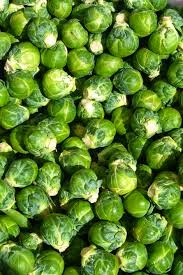
Nothing Like a Deadline to Inspire Me: Brussels Sprouts with Pomegranate

Blogging has been a great way for me to rediscover my writing voice – I’ve wanted to be a (full-time, professional, PAID) writer since I was approximately 6 years old. After hanging on to this idea for a couple of decades, I somehow lost sight of this ambition in my twenties (ironically, the era of my life when I was a full-time, professional, paid technical writer. Maybe all those software instructions just sucked the creative juices out of me. Imagine that.).  At any rate, blogging has been a nice gateway drug back into the writing life. It’s led to some other projects that I’ve enjoyed very much and generally made me feel happy about having some creative output that doesn’t (1) get eaten and disappear forever or (2) require any sort of cleaning up afterwards.

My current relationship with goal-setting is far too complicated for this post; suffice to say that I’ve tried to take a systematic, planned approach to integrating my writing into my regular life, complete with editorial calendars and timelines and to-do lists, etc. As a result, I have blogged less in the last 2 months than I have in the last 2 years. It’s inevitable that I was going to post something today, because it’s the last day of the month and I’m looking at how little progress I’ve made towards the written goals which allegedly are supposed to keep me accountable. Clearly it’s time for a new system.

Wondering what the quilt looks like?
My personal How I Wish I Was Spending My Time trifecta is Cook – Craft – Write (not necessarily in that order), and it appears that I can sustain 2 at a time. The last couple of months have included a lot of cooking and I finally finished the quilt for my friend’s soon-to-arrive baby, so writing has fallen by the wayside. I just got a couple of new craft magazines and inspiration for another writing project, so odds are good that David is taking over the cooking as soon as he gets through finals week, and I’ll be blogging about what an amazing cook he is.

This particular recipe is a dish I took to a Seder that we attended earlier in the month. Potlucks are always a huge bummer, because we inevitably can’t eat 99.9% of what’s there and it makes us collectively feel very sorry for ourselves. The recipe comes from the amazing and wonderful Tori Avey, who writes as The Shiksa in the Kitchen and also as The History Kitchen (a marvelous way to lose a couple of hours – such fascinating stuff!). We love Brussels sprouts and we love pomegranates, and this looked very pretty on a white serving platter with toasted walnuts sprinkled all around.


Roasted Brussels Sprouts with Pomegranate Molasses

2 lb. Brussels sprouts, or however much is on the stalk or in the container you pick up in the produce department
¼ cup olive oil
Salt and pepper
1 cup walnuts, toasted (don’t skip the toasting!)
2 tbsp pomegranate molasses
Fresh pomegranate seeds, optional (this is for the garnish. I couldn’t find any actual pomegranates so we skipped it and everyone was still perfectly happy with the end result)

Preheat the oven to 450 and cover a cookie sheet with aluminum foil.

Wash the sprouts and cut them in half, then toss with the olive oil and salt and pepper to taste. Roast 15 minutes, until they are barely tender and some of the outer leaves are starting to crisp up.

Toss the sprouts with the walnuts. Pour onto a serving platter, drizzle with the pomegranate molasses, and sprinkle with the fresh pomegranate seeds, if you’re using them.

This dish holds well at room temperature and tastes just fine a couple of hours later. We put it in the warming oven for a bit, but I don’t think I’d necessarily recommend that because the sprouts got more cooked than I like. If you make this in advance, just give it time to come to room temperature rather than blasting it with the microwave – although it really is easy enough that you could make it at the last minute.


Friday, April 11, 2014

Pasta Primavera, or It Can't Be FroYo Dinner Every Night, Kids

We’ve been enjoying a family staycation this year during the kids’ spring break. If Imaginary Mom was in charge of things, each night would feature a new and exciting – and delicious! – dinner with fresh seasonal ingredients, prepared in my spotlessly clean gourmet kitchen. Because *I* am in charge instead, last night we had FroYo for dinner. 

The one night I was organized enough to produce dinner after a long day of family fun, we had this, our very favorite springtime dish. We invariably make it on the first warm sunny day of the year, either by accident or design. The ingredients are things we typically have in the fridge, and the whole thing comes together in the amount of time it takes to boil water for pasta – perfect for those days when you can’t bring yourself to come inside and cook until the kids are ready to gnaw their own arms off. 

I could wax poetic about all the possible variations on the ingredients, but it’s the last weekday of staycation and we’re off to do more fun things. Suffice to say that you want to limit yourself to 3-4 vegetables, and use spring-y ones – by this time of year we should all be sick and tired of broccoli and cauliflower and potatoes and squash. If Imaginary Mom had a vegetable garden, she’d go out back and harvest something to throw in here, but I think we’ve established that her crazy overachieving self is not running the show around here these days.

Pasta Primavera

1 ½ cups chicken broth
2-3 sprigs fresh thyme
2 carrots, peeled and diced
8-12 stalks asparagus, broken into 1-inch pieces
1-2 zucchini or yellow squash, diced
1 cup frozen peas
2 tablespoons olive oil
1 lb short pasta
Parmesan cheese, for serving

Put a pot of water for the pasta on to boil. 

In the meantime, put 1 cup of the chicken broth and the fresh thyme in a skillet large enough to hold the pasta. Bring it to a simmer, then add the carrots and cook 2 minutes. Add the asparagus and cook and other 2 minutes. Add the squash and cook 4 minutes.  The broth should be just about cooked away at this point; add the olive oil and stir, then add the peas and cook until they’re thawed and just barely cooked.


In the meantime, cook the pasta as soon as the water boils. Drain well and add to the skillet, along with another ½ cup of broth. Stir to combine, add salt and pepper to taste, and serve with Parmesan cheese on the side.